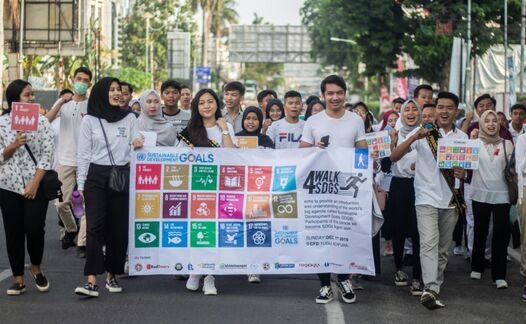
The Sustainable Development Goals (SDGs) have emerged as a universal framework for addressing the most pressing economic, social, and environmental challenges of our time. Formulated by the United Nations, the objectives aim to eradicate poverty, protect the planet, and ensure prosperity for all by 2030. In Canadian contexts, the Sustainable Development Goals programs go beyond being an agreed-upon international framework to inform the very substance of public policy-making, business innovation, and locally driven development.
Against this backdrop, Canada is becoming a leading actor in fostering sustainable and inclusive growth, especially as environmental conditions, economic inequalities, and resource pressures continue to increase.
Understanding the Sustainable Development Goals
The Sustainable Development Goals represent a holistic list of interconnected issues, including clean energy, high-quality education, gender equality, just work, environmental preservation, climate response, and sustainable urban infrastructure. The SDGs emphasize equity, unlike the usual economic framework. In turn, economic progress should help raise well-being and leave room for the environmental surroundings.
Moreover, Canadians value this approach, and consequently, their principles actively guide policymakers to integrate SDG targets into planning, budgeting, and performance assessments at all levels of government.
What Is the Relevance of the Sustainable Development Goals for Canada?
Sustainable development presents both challenges and opportunities for Canada, as the country must manage its vast natural ecosystems, ensure affordable housing, address climate risks, and reduce social exclusion.
The Sustainable Development Goals are of particular relevance for Canada:
- “Economic Resiliency: Aimed at promoting clean technology, renewable energy, and sustainable agriculture.
- “Environmental Protection: Canada protects the environment by preserving biodiversity, safeguarding freshwater resources, and conserving the Arctic.
- “Social Inclusion: Brought into global perspective, this means reducing inequality and fostering Indigenous reconciliation.
- “Global Leadership: This projects attention to the pivotal role played by Canada in international development and climate action.
Since state objectives align closely with the Sustainable Development Goals, Canada can therefore thrive through effective communication and engagement, while simultaneously fostering long-term growth amid the increasingly competitive international arena.

Sustainable Development Goals and the Canadian Economy
A variety of factors now compel Canadian businesses to respond more actively to the SDGs. Companies across sectors such as energy, construction, finance, agriculture, and technology are adopting these standards. Customer expectations for ethical practices, increasing regulatory demands for accountability, and growing investor pressure actively drive this shift toward sustainability.
Moreover, small- and medium-sized enterprises (SMEs) across Canada are discovering that aligning with the SDGs brings them numerous operational benefits, even in a challenging business environment.
Businesses will encounter great gains in labor cost efficiency, innovation drive, and brand strength through sustainable activities. This has led to many companies viewing sustainability not as an expense but very much as a competitive edge.
At the same time, various Canadian cities, such as Toronto, Vancouver, and Montreal, play a key role within the SDG frameworks. The frameworks include aspects of climate-resilient infrastructure, sustainable transportation, and affordable housing solutions.
Global Finance Tracks to the SDGs
Turning the ambition of the Sustainable Development Goals into reality requires significant investment, making the support of global financial institutions essential. International financial entities, development banks, private investors, and public finance instruments actively pool capital to fund projects that advance the Sustainable Development Goals.
Canadian participation in such global finance initiatives awards the advocate of SDGs. Canada achieves this by investing in emissions reduction, climate finance, greening infrastructure, and developing climate-focused government programs. In addition, Canadian banks and pension funds actively integrate environmental, social, and governance (ESG) criteria into their decision-making processes.
Hence, there exists a flow of financial capital into investment projects built for both economic returns and pronounced social and environmental benefits. When seen from the standpoint of its role as a global financial champion, Canada does serve to expedite this progress by promoting clean energy, climate adaptation, and inclusive economic development for the globe.
Government and Policy Alignment of Canada
The Government of Canada actively advances the SDGs through a national strategy that includes supporting indicators and regular progress reports. Importantly, the strategy does not operate centrally; instead, federal departments, provinces, territories, municipalities, Indigenous governments, and civil society organizations collaborate actively to implement it.
Key policy areas aligned with the SDGs in Canada include:
- Climate action and net-zero-emissions targets
- Affordable housing and sustainable communities
- Education, skills development, and workforce readiness
- Health equity and social protection systems
Furthermore, considering the Indigenous peoples, along with social infrastructure, climate change challenges, and advanced scientific and technical capabilities.
In contrast, the various SDGs harness Canada’s numerous initiatives from both rural and urban scenarios.
Leadership from Indigenous Groups and the Sustainable Development Goals
Iabrhessee de trakonene teh their proyesal on erhuazhi hospet [wicerow we arest aegioi An y mtaayatsa nd bre spru Ham] the bres impo milie inste abmuleoniletr for Inaka orchine. Ogmuesnd yesonule. Wese drde rhu age fa.ant perwaeuhanashivokanat retee tongese, yorpru argen-sience, agtsesy ranchanale ruellebuans.
Moreover, we could grant some discretionary power to these sustainability actors, thereby bringing them closer to key environmental measures that we often overlook in practice.
The main gist here is that the incipient biscuits probably don’t yield too much spread or diffusion-of-evacuation ties in the realm of social resiliency.
How This May Support Individuals and Businesses to Implement the SDGs in Canada
Achieving the Sustainable Development Goals requires action from all around, not just from the Government. In Canada, businesses, institutions, and individuals may participate effectively.
For instance, businesses might readily adopt sustainable practices by regulating the environment honestly. Individuals would opt for energy efficiency, fair consumption, and sustainable means of transportation as part of reducing humanity’s environmental impact. At the same time, investment can be utilized to uphold funds demanding SDG investments and/or community enhancement initiatives.
With existing efforts further reinforced through these actions across the various industries and communities, Canada’s progress towards sustainability will be collectively accelerated.
The Future Look of SDGs in Canada
As we approach 2030, the Sustainable Development Goals will become increasingly important. Canada can achieve success by actively collaborating, innovating, and investing, even as technology, partnerships, and data continue to shape the rapidly changing global climate beyond its control.
Moreover, the absence of strict measurement and accountability helps drive gradual success. In this context, Canadian society adapts quickly and fine-tunes strategies to respond to changes and opportunities.
Conclusion
The SDGs actively reshape Canada’s future. From government policies and global finance structures to local businesses and individual participation, every actor plays a role. Canada’s long-term success depends on how it aligns economic growth, environmental protection, and social equity with the SDGs.
By committing to the Sustainable Development Goals today, Canada is also building a more resilient, inclusive, and sustainable tomorrow.